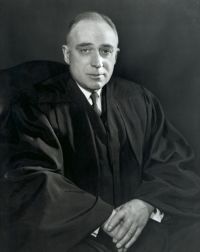
John Marshall Harlan II

John Marshall Harlan II

Summary

Portrait of John Marshall Harlan II John Marshall Harlan II Parker v. Gladden — Dissent

But in allowing Parker to overturn his conviction on the basis of what are no more than inconsequential incidents in an otherwise constitutionally flawless proceeding, the Court encourages others to follow his example in pursuing the jury and may be thought by some to commit federal courts in habeas corpus proceedings to interrogate the jury upon the mere allegation that a prejudicial remark has reached the ears of one of its members.
Source: Wikisource

Portrait of John Marshall Harlan II John Marshall Harlan II Parker v. Gladden — Dissent

Mrs. Inwards also informed Mrs. Parker that an alternate juror, Mrs. Gattman, was sympathetic to Parker's cause.↑ The trial court purported to follow the State Supreme Court's decision in State v. Kristich, 226 Or. 240, 359 P.2d 1106, which held that where a bailiff had communicated with a jury on a point of law prejudice would be presumed. Thus the leged in plaintiff's petition had been called to the Court's attention, the Court, on its own motion, would have granted the defendant a new trial,' and held that Parker deserved a new trial because the communication was of a prejudicial nature.
Source: Wikisource

Portrait of John Marshall Harlan II John Marshall Harlan II Parker v. Gladden — Dissent

Parker was convicted of second degree murder on May 19, 1961, and sentenced to life imprisonment. On September 7, 1961, he addressed a letter to several jurors protesting his innocence, condemning his attorneys for incompetence, intimating that witnesses were coerced into lying, and chiding the jurors for being duped into finding him guilty. After affirmance of his conviction by the Supreme Court of Oregon on September 15, 1963 some two years after the jury verdict-Parker again set out to take his case to the jury.
Source: Wikisource

Get perspective with Kwize: daily news enlightened by great literature