Summary

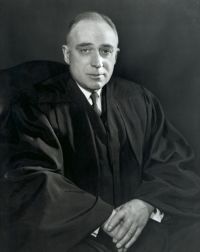
Portrait of John Marshall Harlan II John Marshall Harlan II Poller v. Columbia Broadcasting System…

It must be obvious that the cancellation of an affiliation agreement by one network, not acting in concert with any other, does not alone give rise to a cause of action under the antitrust laws. Federal Broadcasting System, Inc., v. American Broadcasting Co., 3 Cir., 167 F.2d 349. A network is surely free to cut its ties to one station and affiliate with another in the same market.
Source: Wikisource

Portrait of John Marshall Harlan II John Marshall Harlan II Poller v. Columbia Broadcasting System…

Apart from monopoly power, the respondents could have violated the antitrust laws only by conspiring in some manner to use CBS' 'leverage' to restrain trade. Clearly, the disaffiliation alone was not an unlawful use of the network's power. Having built up the value of his station substantially because of its CBS affiliation, petitioner is hardly in a position to claim that by depriving him, in the exercise of a contract right, of the benefit of such an affiliation CBS was unreasonably exercising its superior power to restrain trade.
Source: Wikisource

Portrait of John Marshall Harlan II John Marshall Harlan II Poller v. Columbia Broadcasting System…

This crucial issue, therefore, turns on proof of the respondents' motives. Had petitioner proceeded to trial and introduced no more evidence of motive than was revealed by the pretrial depositions and affidavits, the case, in my opinion, could not well have been permitted to go to the jury. There being no extrinsic evidence of an unlawful purpose, and CBS' executives having unequivocally denied any purpose to eliminate petitioner as a competitor, the jury would be left with no affirmative evidence of any intent to restrain trade.
Source: Wikisource

Get perspective with Kwize: daily news enlightened by great literature