Summary

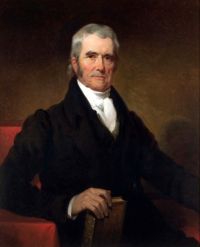
Portrait of John Marshall John Marshall Vattier v. Hinde — Opinion of the Court

In 1802, Vattier purchased the title of Thomas Doyle, the elder, who had no title whatever. Whether he knew that a conveyance had been made to Thomas Doyle, the younger, or not, is immaterial. He could acquire nothing. The principle caveat emptor is completely applicable. The rules respecting a purchaser without notice, are framed for the protection of him who purchases a legal estate and pays the purchase-money, without knowledge of an outstanding equity. They do not protect a person who acquires no semblance of title; they apply fully only to the purchaser of the legal estate.
Source: Wikisource

Portrait of John Marshall John Marshall Vattier v. Hinde — Opinion of the Court

It is the settled practice in the courts of the United States, if the case can be decided on its merits, between those who are regularly before them, to decree as between them; although other persons, not within their jurisdiction, may be collaterally or incidentally concerned, who must have been made parties, had they been amenable to its process, this circumstance shall not expel other suitors who have a constitutional and legal right to submit their case to a court of the United States, provided, the decree may be made, without affecting those interests.
Source: Wikisource

Portrait of John Marshall John Marshall Vattier v. Hinde — Opinion of the Court

In March 1800, Thomas Doyle, being thus indebted to his son, directed the conveyance of lot No. 86 to be made to him, declaring at the time, that it was made in consideration of the debt he owed for his son's land sold to Vance. Had this transaction been in favor of any other creditor than a son, its fairness could never have been impeached. Had he, as guardian for any other person, secured a debt, under the same circumstances, the helpless infancy of the ward would not have tainted the transaction with fraud.
Source: Wikisource

Get perspective with Kwize: daily news enlightened by great literature