Summary

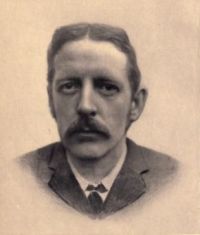
Portrait of John Miller Gray John Miller Gray Encyclopædia Britannica, Ninth Edition (1888)

In addition to his impressions from antique gems, Tassie executed many large profile medallion portraits of his contemporaries, and these form the most original and definitely artistic class of his works. They were modelled in wax from the life or from drawings done from the life, and—when this was impossible—from other authentic sources.
Source: Wikisource

Portrait of John Miller Gray John Miller Gray Encyclopædia Britannica, Ninth Edition (1888)

When his training was completed he visited Dublin in search of commissions, and there became acquainted with Dr Quin, who had been experimenting, as an amateur, in imitating antique engraved gems in coloured pastes. He engaged Tassie as an assistant, and together they perfected the discovery of a vitreous paste composition, styled "enamel," a substance admirably adapted, by its hardness and beauty of texture, for the formation of gems and medallions.
Source: Wikisource

Portrait of John Miller Gray John Miller Gray Encyclopædia Britannica, Ninth Edition (1888)

He died at Kensington on the 26th of October 1860, and bequeathed to the Board of Manufactures, Edinburgh, an extensive and valuable collection of casts and medallions by his uncle and himself, along with portraits of James Tassie and his wife by David Allan, and a series of water-colour studies by George Sanders from pictures of the Dutch and Flemish schools.
Source: Wikisource

Get perspective with Kwize: daily news enlightened by great literature