Summary

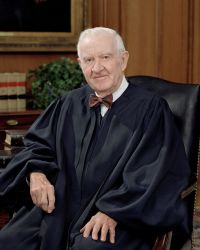
Portrait of John Paul Stevens John Paul Stevens Estelle v. Gamble — Dissenting Opinion (1976)

As a part of that basic obligation, the State and its agents have an affirmative duty to provide reasonable access to medical care, to provide competent, diligent medical personnel, and to ensure that prescribed care is in fact delivered. For denial of medical care is surely not part of the punishment which civilized nations may impose for crime. Of course, not every instance of improper health care violates the Eighth Amendment. Like the rest of us, prisoners must take the risk that a competent, diligent physician will make an error.
Source: Wikisource

Portrait of John Paul Stevens John Paul Stevens Estelle v. Gamble — Dissenting Opinion (1976)

On the basis of Gamble's handwritten complaint, it is impossible to assess the quality of the medical attention he received. As the Court points out, even if what he alleges is true, the doctors may be guilty of nothing more than negligence or malpractice. On the other hand, it is surely not inconceivable that an overworked, undermanned medical staff in a crowded prison [2] is following the expedient course of routinely prescribing nothing more than pain killers when a thorough diagnosis would disclose an obvious need for remedial treatment.
Source: Wikisource

Portrait of John Paul Stevens John Paul Stevens Estelle v. Gamble — Dissenting Opinion (1976)

The Court said: Whatever may be the limits on the scope of inquiry of courts into the internal administration of prisons, allegations such as those asserted by petitioner, however inartfully pleaded, are sufficient to call for the opportunity to offer supporting evidence. We cannot say with assurance that under the allegations of the pro se complaint, which we hold to less stringent standards than formal pleadings drafted by lawyers, it appears "beyond doubt that the plaintiff can prove no set of facts in support of his claim which would entitle him to relief."
Source: Wikisource

Get perspective with Kwize: daily news enlightened by great literature