Summary

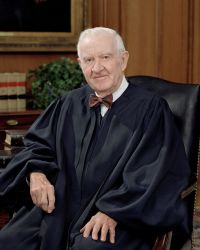
Portrait of John Paul Stevens John Paul Stevens McCarthy v. Bronson — Opinion of the Court

We do not quarrel with petitioner's claim that the most natural reading of the phrase "challenging conditions of confinement," when viewed in isolation, would not include suits seeking relief from isolated episodes of unconstitutional conduct. However, statutory language must always be read in its proper context. "In ascertaining the plain meaning of [a] statute, the court must look to the particular statutory language at issue, as well as the language and design of the statute as a whole."
Source: Wikisource

Portrait of John Paul Stevens John Paul Stevens McCarthy v. Bronson — Opinion of the Court

See Reply Brief for Petitioner 5, n. 3. Second, and, more important, the statute properly interpreted is not constitutionally infirm. No constitutional question arises in cases like this one, in which the plaintiff has waived the right to a jury trial. And, in cases in which the jury right exists and is not waived, the lower courts, guided by the principle of constitutional avoidance, have consistently held that the statute does not authorize reference to a magistrate.
Source: Wikisource

Portrait of John Paul Stevens John Paul Stevens McCarthy v. Bronson — Opinion of the Court

The sole case identified by petitioner that predates the statute's enactment did not even use the phrase "conditions of confinement" much less expound a narrow definition of it. See Procunier v. Martinez, 416 U.S. 396 , 94 S.Ct. 1800, 40 L.Ed.2d 224 (1974) .
Just three years before the statute was drafted, however, our opinion in Preiser v. Rodriguez, 411 U.S. 475 , 93 S.Ct. 1827, 36 L.Ed.2d 439 (1973) , had described two broad categories of prisoner petitions: (1) those challenging the fact or duration of confinement itself; and (2) those challenging the conditions of confinement.
Source: Wikisource

Get perspective with Kwize: daily news enlightened by great literature