Summary

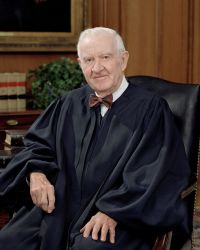
Portrait of John Paul Stevens John Paul Stevens North Dakota v. United States…

The State, which has established a liquor distribution system in order to promote temperance and ensure orderly market conditions, wishes to protect the integrity of that system by requiring out-of-state shippers to file monthly reports and to affix a label to each bottle of liquor sold to a federal enclave for domestic consumption. The clash between the State's interest in preventing the diversion of liquor and the federal interest in obtaining the lowest possible price forms the basis for the Federal Government's Supremacy Clause and pre-emption challenges to the North Dakota regulations.
Source: Wikisource

Portrait of John Paul Stevens John Paul Stevens North Dakota v. United States…

The North Dakota regulations, however, do not require the military to submit to state control or to purchase alcoholic beverage from suppliers within the State or prescribed by the State. The DoD regulation has nothing to say about labeling or reporting by out-of-state suppliers.
When the Court is confronted with questions relating to military discipline and military operations, we properly defer to the judgment of those who must lead our Armed Forces in battle.
Source: Wikisource

Portrait of John Paul Stevens John Paul Stevens North Dakota v. United States…

The Twenty-first Amendment is binding on the Government like everyone else, and empowers North Dakota to require that all liquor sold for use in the State be purchased from a licensed in-state wholesaler. Since letting the Government choose between purchasing label-free bottles from such wholesalers and purchasing labeled bottles from out-of-state distillers provides the Government with greater rather than lesser prerogatives than those enjoyed by other liquor retailers, the labeling requirement does not discriminate against the United States and thus does not violate any federal immunity.
Source: Wikisource

Get perspective with Kwize: daily news enlightened by great literature