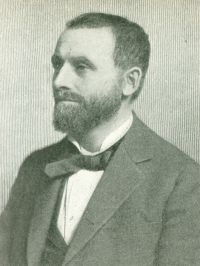
John Peter Altgeld

John Peter Altgeld

Summary

Portrait of John Peter Altgeld John Peter Altgeld The Chicago Martyrs (1899)

To compel a person accused of a crime to be tried by a juror who has prejudiced his case is not a fair trial. Nor should a defendant be compelled to rely, as his security for the impartiality of the jurors by whom he is to be tried, upon the restraining and controlling influence upon the juror's mind of his oath to render a true verdict according to the law and the evidence.
Source: Wikisource

Portrait of John Peter Altgeld John Peter Altgeld The Chicago Martyrs (1899)

Now, with all the eagerness shown by the court to convict Neebe, it must have regarded the evidence against him as very weak, otherwise it would not have made this admission, for if it was a debatable question whether the evidence tended to show guilt, then that evidence must have been far from being conclusive upon the question as to whether he was actually guilty; this being so, the verdict should not have been allowed to stand, because the law requires that a man shall be proven to be guilty beyond a reasonable doubt before he can be convicted of criminal offense.
Source: Wikisource

Portrait of John Peter Altgeld John Peter Altgeld The Chicago Martyrs (1899)

For, if there has been any such extensive conspiracy as the prosecution claims, the police would have soon discovered it. No chief of police could discover a determination on the part of an individual, or even a number of separate individuals, to have personal revenge for having been maltreated, nor could any chief discover a determination by any such individual to kill the next policeman who might assault him. Consequently, the fact that the police did not discover any conspiracy before the Haymarket affair, shows almost conclusively that no such extensive combination could have existed.
Source: Wikisource

Get perspective with Kwize: daily news enlightened by great literature