Summary

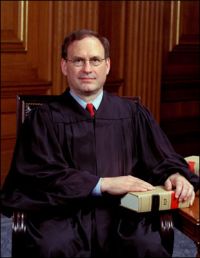
Portrait of Samuel Alito Samuel Alito Williams v. Price — Opinion of the Court

During voir dire proceedings in the Williamses' 1985 trial, the trial court asked two questions regarding racial bias:
Do you personally believe that blacks as a group are more likely to commit crimes of a violent nature involving firearms?
Can you listen to and judge the testimony of a black person in the same fashion as the testimony of a white person, giving each its deserved credibility? All the jurors who were selected to serve answered "no" to the first question and "yes" to the second. The jury convicted both Williams and his brother and sentenced them to death.
Source: Wikisource

Portrait of Samuel Alito Samuel Alito Williams v. Price — Opinion of the Court

Tanner strongly suggests that the exclusion of evidence of juror misconduct pursuant to the traditional "no impeachment" rule is constitutional because of the important purposes that the rule has long been recognized as serving. But of course Tanner does not necessarily mean that the converse is true, i.e., that it is necessarily unconstitutional for a state to adopt a version of the "no impeachment" rule that bars more testimony than does the traditional rule.
Source: Wikisource

Portrait of Samuel Alito Samuel Alito Williams v. Price — Opinion of the Court

Although McDonough was a federal civil case, a state court decision failing to apply this same rule in a criminal prosecution would represent an unreasonable application of clearly established federal law within the meaning of 28 U.S.C. § 2254 (d) (1) . The McDonough Court based its decision on the following principle:
One touchstone of a fair trial is an impartial trier -- "a jury capable and willing to decide the case solely on the evidence before it."
Source: Wikisource

Get perspective with Kwize: daily news enlightened by great literature