Summary

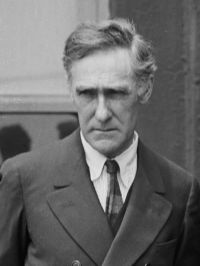
Portrait of John Randolph Neal John Randolph Neal Disunion and Restoration in Tennessee

Fletcher, Secretary of the State, said: “Our mistake was that we made the franchise law sweeping and perpetual, offering no hope or inducement to the ex-rebel to become loyal. The man who is disfranchised in a republic is not apt to feel that it is his government, or to take pride or interest in it, nor apt to make a useful or even law-abiding citizen of it. I do not feel comfortable in a State where half of the people and two thirds of the tax-payers are publicly degraded by law, without motive to be proud of the State and government.”
Source: Gutenberg

Portrait of John Randolph Neal John Randolph Neal Disunion and Restoration in Tennessee

CHAPTER III LOYALTY OF EAST TENNESSEE While we have attempted to show the untenable position of those who maintain that the majority of the people of Tennessee were opposed to separation and it was only a coup d’état of Governor Harris that carried the State into the Confederacy, it is, however, true that a great number of her inhabitants did resist withdrawal and remain openly loyal. This was especially the case with East Tennessee. Her persistent loyalty is a striking illustration of the physical conditions and causes which lay behind the Civil War.
Source: Gutenberg

Portrait of John Randolph Neal John Randolph Neal Disunion and Restoration in Tennessee

CHAPTER IV THE RESTORATION OF CIVIL GOVERNMENT While Tennessee escaped both executive and congressional reconstruction, it did not follow in the restoration of its civil government the plan laid down by President Lincoln. The most distinctive feature of Lincoln’s reconstruction policy lay in the fact that it made the old political people in each of the Southern States self-acting nuclei, which were to bring order out of chaos. According to this theory, neither the President nor Congress had the power to reconstruct a State government.
Source: Gutenberg

Get perspective with Kwize: daily news enlightened by great literature