“ Napoleon never loved the Revolution, and he most thoroughly detested the infamous and sanguinary despotism which had risen upon the ruins of the altar and the throne. He chanced to be in Paris when the drunken and ragged mob, like an inundation, broke into the Tuilleries, and heaped upon the humiliated Louis XVI. and Maria Antoinette the most infamous outrages. He saw the monarch standing at the window of his palace, with the dirty red cap of Jacobinism thrust upon that brow which had worn the crown of Charlemagne. At the sight, the blood boiled in the veins of the youthful Napoleon. ”
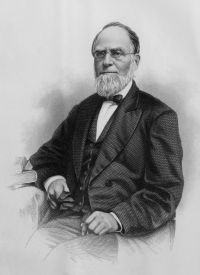
John S. C. Abbott
Summary
John S. C. Abbott’s Josephine is a historical narrative focused on the life of Empress Josephine, wife of Napoleon Bonaparte, examining her intricate relationship with the emperor, her challenges during political turmoil, and the conflict between personal affection and imperial aspirations. The text explores her experiences at the Tuilleries, Malmaison, and the court, emphasizing themes of sorrow, opulence, and the weight of royalty.
Through passages detailing Napoleon’s military endeavors, their emotional separation, and Josephine’s solitude, Abbott depicts her as a figure torn between love, obligation, and the unstoppable wave of revolution. The work combines her tragic legacy as both an emblem of imperial magnificence and a woman burdened by the price of power.
Quotes from Josephine (John S. C. Abbott)
“ From Ulm, Napoleon, with two hundred thousand men, flushed with victory, rushed like a tempest down the valley of the Danube, driving the terrified Austrians before him like chaff swept by the whirlwind. Ten thousand bomb-shells were rained down upon the roofs of Vienna, till the dwellings and the streets were deluged with the blood of innocence, and then the gates were thrown open for the entrance of the conqueror. Alexander, the Emperor of all the Russias, was hastening down from the North, with his barbarian hordes, to aid the beleaguered city. Napoleon tarried not at Vienna. ”
“ The tornado of counter-revolution sweeps over Europe, and all her exalted friends and towering hopes are prostrated in the dust. Lingering years of disappointment and sadness pass over her, and old age, with its infirmities, places her upon a dying bed. One only child, Louis Napoleon, since President of the French Republic, the victim of corroding ambition and ceaselessly-gnawing discontent, stands at her bed-side to close her eyes, and to follow her, a solitary and lonely mourner, to the grave. The dream of life has passed. ”
