“ I feel these are awake with me doing their work, and that the world is rushing on—to fulfil its mighty destinies, and I must do my work, and fulfil my grand and glorious end.’ And he thought, with mingled pity and admiration, of the workers in yard and factory, in forge and mine, and far away upon the rolling sea. Whether from unbelief or disrespectability, many working men shunned the churches, and looked askance at ‘the lads in black.’ Ah! if they only knew, thought Norman, what peace and happiness would come to their homes by their acceptance of the Saviour. ”
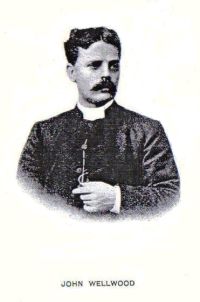
John Wellwood
Summary
John Wellwood’s Norman Macleod is a literary examination of 19th-century Scottish Presbyterianism, centering on the titular minister, a figure molded by Highland scenery and deep Christian belief. Against the background of the Church’s challenges with modernity and its drive for missionary expansion, the novel explores Macleod’s spiritual guidance, his support for worldwide evangelism, and his attempts to connect faith with the everyday needs of his community.
Themes of ethical responsibility, the conflict between custom and advancement, and the redemptive force of religion run throughout the narrative, grounded in Macleod’s personal evolution from rural Scotland to grand visions of spiritual triumph in far-off regions. Wellwood’s depiction highlights the minister’s dual function as a caretaker of his parish and a prophet for widespread Christian rejuvenation.
Quotes from Norman Macleod (John Wellwood)
“ The vision of millions upon millions in the far East worshipping idols had long haunted Macleod’s imagination, and, with his sense of apostleship waxing as the years went on, heathendom became more and more to him a mystery and a horror. The Asiatic was a man: reach his heart, it was the same as ours, and must open to the religion of humanity. To Macleod’s stamp of Christian the whole idea of foreign missions was peculiarly congenial; every enterprise in that field, whatever Church had the credit, he hailed with enthusiasm. ”
“ It seems to me as if the spiritual conquest of India was a work reserved for these latter days to accomplish, because requiring all the previous dear-bought experiences of the Church, and all the preliminary education of the world, and that, when accomplished,—as by the help of the living Christ it shall,—it will be a very Armageddon: the last great battle against every form of unbelief, the last fortress of the enemy stormed, the last victory gained as necessary to secure the unimpeded progress and the final triumph of the world’s regeneration. ”
