Summary

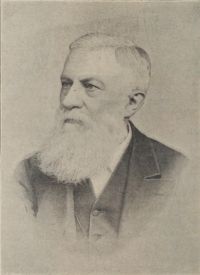
Portrait of Joseph Edkins Joseph Edkins A Grammar of the Chinese Colloquial Language Commonly Called the Mandarin Dialect (1857)

The study of the Chinese language is much too extensive to be conveniently comprised within the limits of a single work. The elucidation of one portion only of Chinese grammar has been undertaken in the present work, viz. that of the mandarin dialect. The field thus embraced coincides with that of Prémare in the first part of his work, and with the second division of Remusat's grammar.
Source: Wikisource

Portrait of Joseph Edkins Joseph Edkins A Grammar of the Chinese Colloquial Language Commonly Called the Mandarin Dialect (1857)

The works of Morrison and Marshman on the grammar of this language, fail to convert to the mind of the student, the richness of its idioms, and the extended development of its peculiar principles. They were not aware of what their predecessors had already accomplished, and consequently spent several years in acquiring such a knowledge on the subject, as may now be gained in one, by means of Prémare and the other helps since placed in the hands in the learner.
Source: Wikisource

Portrait of Joseph Edkins Joseph Edkins A Grammar of the Chinese Colloquial Language Commonly Called the Mandarin Dialect (1857)

Through political and temporary arrangements, Peking as the capital is the standard of Kwan-hwa, but true philology must embrace in its researches the whole territory, where in its essential characteristics, the same spoken language prevails. Accordingly, a third mandarin system must here be introduced. The Nanking and Peking dialects are at least as wide apart, as that of Sï-c‘hwen is from either of them. In fact, the three are varieties of the same great dialect.
In western mandarin, taking C‘heng-tu-fu the capital of Sï-c‘hwen as the standard, there are four tone-classes
Source: Wikisource

Get perspective with Kwize: daily news enlightened by great literature