Summary

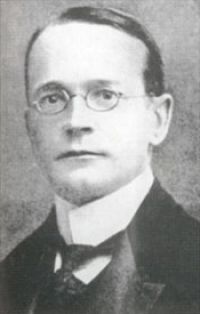
Portrait of Joseph McCabe Joseph McCabe The Story of Evolution — Chapter XIX. Man and the Great Ice-Age

Several decades of research have detected the unmistakable signs of glacial action over this vast area of the northern hemisphere. Most of Europe north of the Thames and the Danube, nearly all Canada and a very large part of the United States, and a somewhat less expanse of Northern Asia, bear to this day the deep scars of the thick, moving ice-sheets. Exposed rock-surfaces are ground and scratched, beds of pebbles are twisted and contorted hollows are scooped out, and moraines—the rubbish-heaps of the glaciers—are found on every side.
Source: Wikisource

Portrait of Joseph McCabe Joseph McCabe The Story of Evolution — Chapter XIX. Man and the Great Ice-Age

When the ice and snow had ended, and the trees and flowers, crowded in the southern area, slowly spread once more over the virgin soil, it was only the temperate species that could pass the zone guarded by the Alps and the Pyrenees. On the Alps themselves the Pleistocene population still lingers, their successful adaptation to the cold now preventing them from descending to the plains.
Source: Wikisource

Portrait of Joseph McCabe Joseph McCabe The Story of Evolution — Chapter XIX. Man and the Great Ice-Age

It would therefore seem that the precursors of man made singularly little, if any, progress during the vast span of time between the Miocene and the Ice-Age, and that then something occurred which quickened the face of human evolution. From the Neanderthal level man will advance to the height of modern civilisation in about one-tenth the time that it took him to advance from the level of the higher ape to that of the lowest savage.
Source: Wikisource

Get perspective with Kwize: daily news enlightened by great literature