Summary

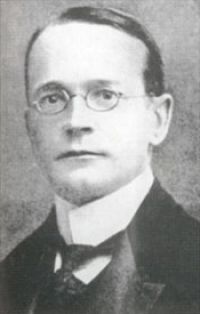
Portrait of Joseph McCabe Joseph McCabe,  Toleration and other essays — Introduction (1912)

“ I do not speak of Voltaire the historian, who, a distinguished writer says, introduced history for the first time into the realm of letters; Voltaire the dramatist, whose name is inscribed for ever in the temple of the tragic muse; Voltaire the physicist, who drove the old Cartesianism out of France, and imposed on it the fertile principles of Newton; Voltaire the social reformer, who talked to eighteenth- century kings of the rights of man, and scourged every judicial criminal of his aristocratic age; Voltaire the cosmopolitan, who boldly set up England's ensign of liberty in feudal France. ”
Source: Wikisource

Portrait of Joseph McCabe Joseph McCabe,  Toleration and other essays — Introduction (1912)

“ Why reproduce at all, in the twentieth century, these fitting scourges of the superstitions of the eighteenth? I have said that they deserve to be reproduced for their historical interest and for the great part they have played in the history of Europe; but there is another reason. I have an idea that, if Voltaire were alive in England to-day, he would write with more scathing irony than ever. ”
Source: Wikisource

Portrait of Joseph McCabe Joseph McCabe,  Toleration and other essays — Introduction (1912)

“ As long as the clergy maintain that their rule in the past was a benefit to civilisation, and therefore its decay may be a menace to civilisation, we are bound to tell the ugly truth in regard to the past. As long as educated men and women among us profess a belief in the magic of transubstantiation and auricular confession and miracles, and the uneducated are encouraged to believe these things literally, the irony of Voltaire is legitimate. Christian bodies have, of late years, made repeated attempts to induce our leaders of culture to profess the Christian faith. ”
Source: Wikisource

Get perspective with Kwize: daily news enlightened by great literature