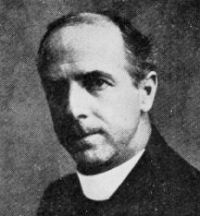
Joseph Michael Woods

Joseph Michael Woods

Summary

Portrait of Joseph Michael Woods Joseph Michael Woods Catholic Encyclopedia (1913)

Since the seventh century the patriarchate, as we have seen, was divided between the Jacobites and the Melchites, both of which bodies eventually became schismatical. Among the patriarchs a few had courted the friendship of Rome, but none seems to have entered into full communion with her. There were, however, some Christians, as there are today, who were in no sense schismatical, but remained in full communion with the Holy See. It was doubtless in their behalf that in the pontificate of Innocent III (1198–1216) a patriarch of the Latin rite was appointed for Alexandria.
Source: Wikisource

Portrait of Joseph Michael Woods Joseph Michael Woods Catholic Encyclopedia (1913)

Cyril (412–444) whose noble defence of the Divinity of Christ has rendered his memory precious in the Church, the Patriarchate of Alexandria reached its most flourishing epoch. Over 100 bishops, among them ten metropolitans, acknowledged his authority; he tells us himself that the city was renowned for the number of its churches, monasteries, priests, and religious (P. G., LXX, 972) . At this time, too, the patriarch possessed considerable civil power, and may be said to have reached the zenith of his reputation.
Source: Wikisource

Portrait of Joseph Michael Woods Joseph Michael Woods Catholic Encyclopedia (1913)

The Jacobites, utterly demoralized, managed to continue the succession of their patriarchs, who, as we have seen, resided no longer in Alexandria, but in old Cairo. In its widest extension, the patriarchate included fifteen bishoprics, and laid claim to jurisdiction over all the Coptic Christians of Egypt, Abyssinia, Nubia, and Barbary, or the native tribes of northern Africa. During this dark period the Melchites fell more and more under the influence of the Byzantine patriarchs, and thus sank over deeper into the Greek schism.
Source: Wikisource

Get perspective with Kwize: daily news enlightened by great literature