Summary

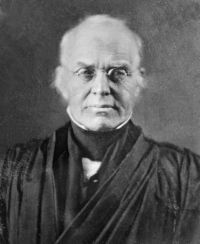
Portrait of Joseph Story Joseph Story Ellicott v. Pearl — Opinion of the Court

The reason why a survey, made by a public surveyor in discharge of his public duties, is admitted as evidence in suits between other parties, is, not that it is hearsay; but that the act is officially done under oath, and in discharge of his duties to the government and the public. But it has never been supposed, that if in such a survey the surveyor should go on to state collateral facts, or declarations of the parties, or other matters, not within the scope of his proper official functions; he could thereby make them evidence as between third persons.
Source: Wikisource

Portrait of Joseph Story Joseph Story Ellicott v. Pearl — Opinion of the Court

But, in truth, the evidence was offered to discredit, in part, his present testimony: and certainly the demandants were not at liberty to discredit their own witness by showing his former declarations on the same subject; though they might show by other witnesses that he was mistaken. But independent of these objections, the evidence was inadmissible upon general principles. It was mere hearsay. The survey, made by a surveyor, being under oath, is evidence as to all things which are properly within the line of his duty.
Source: Wikisource

Portrait of Joseph Story Joseph Story Ellicott v. Pearl — Opinion of the Court

The argument insupport of the instruction, as prayed, assumes that there can be no possession to defeat an adverse title, except in one or other of these ways; that is, by an actual residence, or an actual enclosure: a doctrine wholly irreconcilable with principle and authority. Nothing can be more clear, than that a fence is not indispensable to constitute possession of a tract of land.
Source: Wikisource

Get perspective with Kwize: daily news enlightened by great literature