Summary

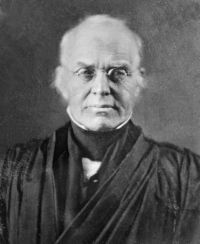
Portrait of Joseph Story Joseph Story Ex parte Watkins (32 U.S. 568)…

I have seen no statute of Maryland which, either in terms or by inference, makes a committitur to himself necessary to justify a sheriff in detaining has prisoner under a capias ad satisfaciendum. It is true, that, by a very humane and judicious provision, the laws of Maryland have permitted the plaintiff to indulge the defendant in execution, without losing his debt; and from this, the practice might naturally grow up to bring the defendant into court to await the will of the plaintiff
Source: Wikisource

Portrait of Joseph Story Joseph Story Ex parte Watkins (32 U.S. 568)…

If the attorney-general wishes him to be committed, he is entitled to pray a commitment to be made by the court. If he does not pray it, it is difficult to perceive, upon what ground it can be maintained, that the party is any longer to be detained in the custody of the sheriff. The latter has no power to arrest the party, or to detain him, except according to the exigency of the writ; and he has discharged himself of his whole duty, when he has produced the body in court.
Source: Wikisource

Portrait of Joseph Story Joseph Story Ex parte Watkins (32 U.S. 568)…

Watkins was never brought into court, nor committed by the order of the court. He is now held in jail, and has, ever since the return-term, been held in jail, solely upon the capias ad satisfaciendum, which became functus officio after the return-day. He might have been arrested and detained in jail, if he had not been previously in custody, until the return-day; but his detention afterwards, was not, in our judgment, justified by the process. In every view which we have been enabled to take of the case, we cannot find any principle or authority to justify his detention.
Source: Wikisource

Get perspective with Kwize: daily news enlightened by great literature