Summary

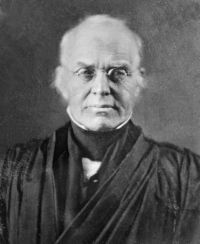
Portrait of Joseph Story Joseph Story Randolph v. Donaldson — Opinion of the Court

When a prisoner is regularly committed to a state jail by the marshal, he is no longer in the custody of the marshal, nor controlable by him. The marshal has no authority to command or direct the keeper in respect to the nature of the imprisonment. The keeper becomes responsible for his own acts, and may expose himself by misconduct to the 'pains and penalties' of the law. For certain purposes, and to certain intents, the state jail lawfully used by the United States, may be deemed to be the jail of the United States, and that keeper to be keeper of the United States.
Source: Wikisource

Portrait of Joseph Story Joseph Story Randolph v. Donaldson — Opinion of the Court

If the jail is bad, the justices of the county are responsible. If the prisoner escape through the negligence or by the consent of the jailor, the sheriff is liable, because the jailor is his deputy. In Virginia if a sheriff commit a prisoner to the district jail, he is not liable, because the district jailor is not his deputy. A Habeas Corpus would be directed to the jailor and not the marshal. As to the risk of the revenue, the United States must suffer as others do; they have thought proper to trust it to such keepers and if they suffer, the remedy is in their own hands.
Source: Wikisource

Portrait of Joseph Story Joseph Story Randolph v. Donaldson — Opinion of the Court

It is not unreasonable to charge the marshal, for he has by law all the power necessary for the safe keeping of his prisoners. Laws of the United States, vol. 1, p. 65. He may call out guards, or he may have an officer on purpose to keep his prisoners.
He is bound to deliver over all his prisoners to his successor and if bound to deliver over, he is bound to safe keep them. If those who are confined in the county jails are not in his custody, there are none in his custody.
Source: Wikisource

Get perspective with Kwize: daily news enlightened by great literature