Summary

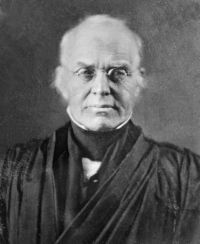
Portrait of Joseph Story Joseph Story Fleckner v. President Directors and Company of the Bank of the United States…

If it is to discount, must there not be some chose in action, or written evidence of a debt, payable at a future time, which is to be the subject of the discount? Nothing can be clearer, than that by the language of the commercial world, and the settled practice of banks, a discount by a bank means, ex vi termini, a deduction or draw-back made upon its advances or loans of money, upon negotiable paper, or other evidences of debt, payable at a future day, which are transferred to the bank.
Source: Wikisource

Portrait of Joseph Story Joseph Story Fleckner v. President Directors and Company of the Bank of the United States…

Indeed, we do not know in what other sense the word discount is to be interpreted. Even in England, where no statute authorizes bankers to make discounts, it has been solemnly adjudged, that the taking of interest in advance by bankers, upon loans, in the ordinary course of business, is not usurious.
If, indeed, the law were otherwise, it would not follow, that the transfer to the bank of the present note would be void, so that the maker of the note could set it up in his defence.
Source: Wikisource

Portrait of Joseph Story Joseph Story Fleckner v. President Directors and Company of the Bank of the United States…

The first objection urged against this evidence is, that the corporation could not authorize any act to be done by an agent, by a mere vote of the directors, but only by an appointment under its corporate seal. And the ancient doctrine of the common law, that a corporation can only act through the instrumentality of its common seal, has been relied upon for this purpose.
Source: Wikisource

Get perspective with Kwize: daily news enlightened by great literature