Summary

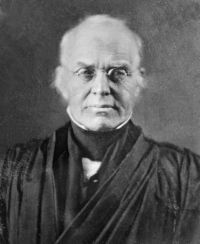
Portrait of Joseph Story Joseph Story The Bank of the United States v…

Assuming, then, that the directors of the parent bank were, as a board, to approve of the bond, so far as it respects the securities, in what manner is that approval to be evidenced? Without question, the directors keep a record of their proceedings as a board; and it appears by the rules and regulations of the parent bank read at the bar, that the cashier is bound 'to attend all meetings of the board, and to keep a fair and regular record of its proceedings.' If he does not keep such a record, are all such proceedings void, or is the bank at liberty to establish them by secondary evidence?
Source: Wikisource

Portrait of Joseph Story Joseph Story The Bank of the United States v…

In corporations existing at the common law and by charter, there are great diversities both of powers and organization. In some corporations the whole powers rest in a select body, or in select bodies, with powers to perpetuate their own corporate existence, by filling up vacancies in their own body; and such body or bodies constitute the corporation itself, and the meetings and acts done thereat are the meetings and acts of the corporation itself. In short, they constitute the corporation, so far as it has life or organization exclusively.
Source: Wikisource

Portrait of Joseph Story Joseph Story The Bank of the United States v…

We do not admit, as a general proposition, that the acts of a corporation, although in all other respects rightly transacted, are invalid, merely from the omission to have them reduced to writing, unless the statute creating it makes such writing indispensable as evidence, or to give them an obligatory force. If the statute imposes such a restriction, it must be obeyed; if it does not, then it remains for those who assert the doctrine to establish it by the principles of the common law, and by decisive authorities.
Source: Wikisource

Get perspective with Kwize: daily news enlightened by great literature