Summary

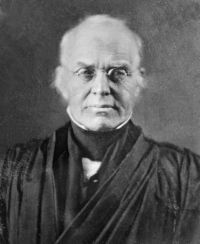
Portrait of Joseph Story Joseph Story Van Ness v. Pacard — Opinion of the Court

The rule, however, never was, at least as far back as we can trace it in the books, inflexible, and without exceptions. It was construed most strictly between executor and heir in favour of the latter; more liberally between tenant for life or in tail, and remainder man or reversioner, in favour of the former; and with much greater latitude between landlord and tenant, in favour of the tenant. But an exception of a much broader cast, and whose origin may be traced almost as high as the rule itself, is of fixtures erected for the purposes of trade.
Source: Wikisource

Portrait of Joseph Story Joseph Story Van Ness v. Pacard — Opinion of the Court

If the house were built principally for a dwelling house for the family, independently of carrying on the trade, then it would doubtless be deemed a fixture, falling under the general rule, and immovable. But if the residence of the family were merely an accessory for the more beneficial exercise of the trade, and with a view to superior accommodation in this particular, then it is within the exception. There are many trades which cannot be carried on well, without the presence of many persons by night as well as by day.
Source: Wikisource

Portrait of Joseph Story Joseph Story Van Ness v. Pacard — Opinion of the Court

Being once annexed to the freehold by the tenant, they became a part of the realty, and could never afterwards be severed by the tenant. The distinction is certainly a nice one between fixtures for the purposes of trade, and fixtures for agricultural purposes; at least in those cases, where the sale of the produce constitutes the principal object of the tenant, and the erections are for the purpose of such a beneficial enjoyment of the estate.
Source: Wikisource

Get perspective with Kwize: daily news enlightened by great literature