Summary

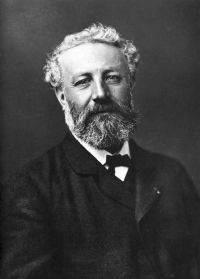
Portrait of Jules Verne Jules Verne 20,000 Leagues Under the Seas… (1870)

For three months, during which each day seemed like a century, the Abraham Lincoln plowed all the northerly seas of the Pacific, racing after whales sighted, abruptly veering off course, swerving sharply from one tack to another, stopping suddenly, putting on steam and reversing engines in quick succession, at the risk of stripping its gears, and it didn't leave a single point unexplored from the beaches of Japan to the coasts of America.
Source: Wikisource

Portrait of Jules Verne Jules Verne 20,000 Leagues Under the Seas… (1870)

And how many times I shared the excitement of general staff and crew when some unpredictable whale lifted its blackish back above the waves. In an instant the frigate's deck would become densely populated. The cowls over the companionways would vomit a torrent of sailors and officers. With panting chests and anxious eyes, we each would observe the cetacean's movements. I stared; I stared until I nearly went blind from a worn-out retina, while Conseil, as stoic as ever, kept repeating to me in a calm tone:
"If master's eyes would kindly stop bulging, master will see farther!"
Source: Wikisource

Portrait of Jules Verne Jules Verne 20,000 Leagues Under the Seas… (1870)

Ned Land still kept up the most tenacious skepticism; beyond his spells on watch, he pretended that he never even looked at the surface of the waves, at least while no whales were in sight. And yet the marvelous power of his vision could have performed yeoman service. But this stubborn Canadian spent eight hours out of every twelve reading or sleeping in his cabin. A hundred times I chided him for his unconcern.
"Bah!" he replied. "Nothing's out there, Professor Aronnax, and if there is some animal, what chance would we have of spotting it? Can't you see we're just wandering around at random?
Source: Wikisource

Get perspective with Kwize: daily news enlightened by great literature