Summary

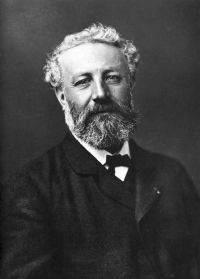
Portrait of Jules Verne Jules Verne Around the Moon — Chapter XVIII (1873)

The atmosphere enveloped the disc with a fluid mantle; vapor deposited itself in the shape of clouds; this natural screen tempered the ardor of the solar rays, and retained the nocturnal radiation. Light, like heat, can diffuse itself in the air; hence an equality between the influences which no longer exists, now that atmosphere has almost entirely disappeared. And now I am going to astonish you."
"Astonish us?" said Michel Ardan.
"I firmly believe that at the period when the moon was inhabited, the nights and days did not last 354 hours!"
"And why?" asked Nicholl quickly.
Source: Wikisource

Portrait of Jules Verne Jules Verne Around the Moon — Chapter XVIII (1873)

Everywhere and always the geological works of nature, never the work of man. If, then, there exist representatives of the animal kingdom on the moon, they must have fled to those unfathomable cavities which the eye cannot reach; which I cannot admit, for they must have left traces of their passage on those plains which the atmosphere must cover, however slightly raised it may be.
Source: Wikisource

Portrait of Jules Verne Jules Verne Around the Moon — Chapter XVIII (1873)

In her actual state, with her surrounding atmosphere certainly very much reduced, her seas for the most part dried up, her insufficient supply of water restricted, vegetation, sudden alternations of cold and heat, her days and nights of 354 hours-- the moon does not seem habitable to me, nor does she seem propitious to animal development, nor sufficient for the wants of existence as we understand it.
Source: Wikisource

Get perspective with Kwize: daily news enlightened by great literature