Summary

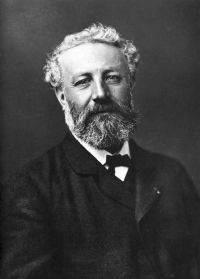
Portrait of Jules Verne Jules Verne In Search of the Castaways; or Captain Grant's Children… (1911)

Quadrupeds, and even birds, are rare on these inhospitable shores, so that the Maories have always eaten human flesh. There are even 'man-eating seasons,' as there are in civilized countries hunting seasons. Then begin the great wars, and whole tribes are served up on the tables of the conquerors."
"Well, then," said Glenarvan, "according to your mode of reasoning, Paganel, cannibalism will not cease in New Zealand until her pastures teem with sheep and oxen."
Source: Wikisource

Portrait of Jules Verne Jules Verne In Search of the Castaways; or Captain Grant's Children… (1911)

Was it religion that prompted him to cannibalism? No! it was hunger."
"Hunger?" said John Mangles.
"Hunger!" repeated Paganel; "but, above all, the necessity of the carnivorous appetite of replacing the bodily waste, by the azote contained in animal tissues. The lungs are satisfied with a provision of vegetable and farinaceous food. But to be strong and active the body must be supplied with those plastic elements that renew the muscles. Until the Maories become members of the Vegetarian Association they will eat meat, and human flesh as meat."
"Why not animal flesh?"
Source: Wikisource

Portrait of Jules Verne Jules Verne In Search of the Castaways; or Captain Grant's Children… (1911)

Besides, in the eyes of the Maories, nothing is more natural than to eat one another. The missionaries often questioned them about cannibalism. They asked them why they devoured their brothers; to which the chiefs made answer that fish eat fish, dogs eat men, men eat dogs, and dogs eat one another. Even the Maori mythology has a legend of a god who ate another god
Source: Wikisource

Get perspective with Kwize: daily news enlightened by great literature