Summary

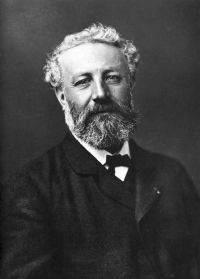
Portrait of Jules Verne Jules Verne In Search of the Castaways; or Captain Grant's Children… (1911)

At two hundred feet below the summit, John Mangles and his sailors reached the dangerous ridge that had been so obstinately defended by the natives. If by ill luck the Maories, more cunning than the fugitives, had only pretended to retreat; if they were not really duped by the volcanic phenomenon, this was the spot where their presence would be betrayed. Glenarvan could not but shudder, in spite of his confidence, and in spite of the jokes of Paganel. The fate of the whole party would hang in the balance for the ten minutes required to pass along that ridge.
Source: Wikisource

Portrait of Jules Verne Jules Verne In Search of the Castaways; or Captain Grant's Children… (1911)

Paganel had treasured up his map of New Zealand, and on it could trace out the best roads.
After discussion, the fugitives resolved to make for the Bay of Plenty, towards the east. The region was unknown, but apparently desert. The travelers, who from their past experience, had learned to make light of physical difficulties, feared nothing but meeting Maories. At any cost they wanted to avoid them and gain the east coast, where the missionaries had several stations. That part of the country had hitherto escaped the horrors of war, and the natives were not in the habit of scouring the country.
Source: Wikisource

Portrait of Jules Verne Jules Verne In Search of the Castaways; or Captain Grant's Children… (1911)

Paganel welcomed the storm, which was a valuable aid to his plans, and completed his program. The savages are superstitiously affected by the great phenomena of nature. The New Zealanders think that thunder is the angry voice of Noui-Atoua, and lightning the fierce gleam of his eyes. Thus their deity was coming personally to chastise the violators of the taboo.
At eight o'clock, the summit of the Maunganamu was lost in portentous darkness. The sky would supply a black background for the blaze which Paganel was about to throw on it. The Maories could no longer see their prisoners
Source: Wikisource

Get perspective with Kwize: daily news enlightened by great literature