Summary

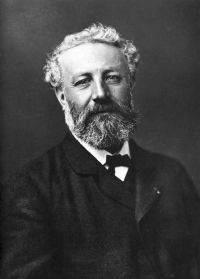
Portrait of Jules Verne Jules Verne In Search of the Castaways; or Captain Grant's Children… (1911)

The bodies of slaves are not protected by taboo like those of their masters. They belong to the tribe; they were a sort of small change thrown among the mourners, and the moment the sacrifice was over, the whole crowd, chiefs, warriors, old men, women, children, without distinction of age, or sex, fell upon the senseless remains with brutal appetite. Faster than a rapid pen could describe it, the bodies, still reeking, were dismembered, divided, cut up, not into morsels, but into crumbs. Of the two hundred Maories present everyone obtained a share.
Source: Wikisource

Portrait of Jules Verne Jules Verne In Search of the Castaways; or Captain Grant's Children… (1911)

In short, the most trifling acts of the Maories are directed and modified by this singular custom, the deity is brought into constant contact with their daily life. The taboo has the same weight as a law; or rather, the code of the Maories, indisputable and undisputed, is comprised in the frequent applications of the taboo.
As to the prisoners confined in the Ware-Atoua, it was an arbitrary taboo which had saved them from the fury of the tribe. Some of the natives, friends and partisans of Kai-Koumou, desisted at once on hearing their chief's voice, and protected the captives from the rest.
Source: Wikisource

Portrait of Jules Verne Jules Verne In Search of the Castaways; or Captain Grant's Children… (1911)

KAI-KOUMOU, as frequently happens among the Maories, joined the title of ariki to that of tribal chief. He was invested with the dignity of priest, and, as such, he had the power to throw over persons or things the superstitious protection of the "taboo."
The "taboo," which is common to all the Polynesian races, has the primary effect of isolating the "tabooed" person and preventing the use of "tabooed" things.
Source: Wikisource

Get perspective with Kwize: daily news enlightened by great literature