Summary

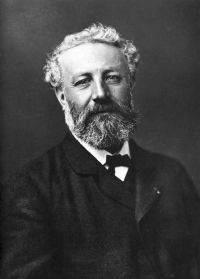
Portrait of Jules Verne Jules Verne In Search of the Castaways; or Captain Grant's Children… (1911)

Savages in general, and particularly the Maories, have a notion of dignity from which they never derogate. They respect, above all things, coolness and courage. Glenarvan was aware that by this mode of procedure, he and his companions would spare themselves needless humiliation.
From the moment of embarking, the natives, who were very taciturn, like all savages, had scarcely exchanged a word, but from the few sentences they did utter, Glenarvan felt certain that the English language was familiar to them. He therefore made up his mind to question the chief on the fate that awaited them.
Source: Wikisource

Portrait of Jules Verne Jules Verne In Search of the Castaways; or Captain Grant's Children… (1911)

The most audacious tourist will scarcely venture to invade these sacred shores; in fact, the Upper Waikato is sealed against profane Europeans.
Paganel was aware of the feelings of veneration with which the natives regard this great arterial stream. He knew that the English and German naturalists had never penetrated further than its junction with the Waipa. He wondered how far the good pleasure of Kai-Koumou would carry his captives? He could not have guessed, but for hearing the word "Taupo" repeatedly uttered between the chief and his warriors.
Source: Wikisource

Portrait of Jules Verne Jules Verne In Search of the Castaways; or Captain Grant's Children… (1911)

But he remarks that there is this difference: the armorial bearings of Europe are frequently a proof only of the merits of the first who bore them, and are no certificate of the merits of his descendants; while the individual coat-of-arms of the Maori is an irrefragible proof that it was earned by the display of extraordinary personal courage.
Source: Wikisource

Get perspective with Kwize: daily news enlightened by great literature