Summary

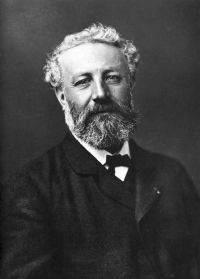
Portrait of Jules Verne Jules Verne In Search of the Castaways; or Captain Grant's Children… (1911)

He felt for the tufts and grass and shrubs able to afford a foothold; tried them and then placed Lady Helena's foot on them. Some birds, suddenly awakened, flew away, uttering feeble cries, and the fugitives trembled when a stone loosened from its bed rolled to the foot of the mountain.
They had reached half-way down the slope, when a voice was heard from the opening of the grotto.
"Stop!" whispered John Mangles.
Source: Wikisource

Portrait of Jules Verne Jules Verne In Search of the Castaways; or Captain Grant's Children… (1911)

As soon as he was sure of it, he crept over to Glenarvan and John Mangles, and startling them from their melancholy thoughts, led them to the end of the hut.
"Listen," said he, motioning them to stoop.
The scratching became more and more audible; they could hear the little stones grate on a hard body and roll away.
"Some animal in his burrow," said John Mangles.
Glenarvan struck his forehead.
"Who knows?" said he, "it might be a man."
"Animal or man," answered the Major, "I will soon find out!"
Source: Wikisource

Portrait of Jules Verne Jules Verne In Search of the Castaways; or Captain Grant's Children… (1911)

It was of vital importance that before the decisive moment arrived they should put themselves beyond the reach of the savages, so as to put them off their track. But their progress was slow, for the paths were steep. Lady Glenarvan climbed the slopes, supported, not to say carried, by Glenarvan, and Mary Grant leaned on the arm of John Mangles; Robert, radiant with joy, triumphant at his success, led the march, and the two sailors brought up the rear.
Source: Wikisource

Get perspective with Kwize: daily news enlightened by great literature