Summary

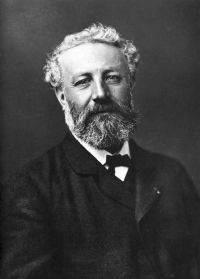
Portrait of Jules Verne Jules Verne In Search of the Castaways; or Captain Grant's Children… (1911)

Nothing but a sharp recall from Glenarvan kept the boy in proper order.
The country now became more diversified, and the rising ground indicated their approach to a mountainous district. Rivers were more numerous, and came rushing noisily down the slopes. Paganel consulted his maps, and when he found any of those streams not marked, which often happened, all the fire of a geographer burned in his veins, and he would exclaim, with a charming air of vexation:
"A river which hasn't a name is like having no civil standing. It has no existence in the eye of geographical law."
Source: Wikisource

Portrait of Jules Verne Jules Verne In Search of the Castaways; or Captain Grant's Children… (1911)

It could not be accomplished without the help of the hardy mules of the far-famed Argentine breed. Those reared in the country are much superior to their progenitors. They are not particular about their food, and only drink once a day, and they can go with ease ten leagues in eight hours.
There are no inns along this road from one ocean to another. The only viands on which travelers can regale themselves are dried meat, rice seasoned with pimento, and such game as may be shot _en route_.
Source: Wikisource

Portrait of Jules Verne Jules Verne In Search of the Castaways; or Captain Grant's Children… (1911)

The torrents provide them with water in the mountains, and the rivulets in the plains, which they improve by the addition of a few drops of rum, and each man carries a supply of this in a bullock's horn, called CHIFFLE. They have to be careful, however, not to indulge too freely in alcoholic drinks, as the climate itself has a peculiarly exhilarating effect on the nervous system.
Source: Wikisource

Get perspective with Kwize: daily news enlightened by great literature