Summary

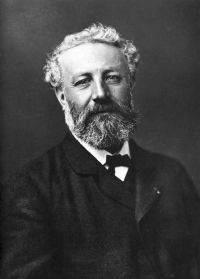
Portrait of Jules Verne Jules Verne In Search of the Castaways; or Captain Grant's Children… (1911)

Instead of presenting their broad surface to the sunlight, only the side is turned. Only the profile of the leaves is seen in this singular foliage. Consequently the sun's rays slant down them to the earth, as if through the open slants of a Venetian blind.
Glenarvan expressed his surprise at this circumstance, and wondered what could be the cause of it. Paganel, who was never at a loss for an answer, immediately replied:
"What astonishes me is not the caprice of nature. She knows what she is about, but botanists don't always know what they are saying.
Source: Wikisource

Portrait of Jules Verne Jules Verne In Search of the Castaways; or Captain Grant's Children… (1911)

There is nothing more intelligent than a leaf."
"And nothing more selfish," added the Major. "These only thought of themselves, and not at all of travelers."
Everyone inclined to the opinion of McNabbs except Paganel, who congratulated himself on walking under shadeless trees, though all the time he was wiping the perspiration from his forehead. However, this disposition of foliage was certainly to be regretted, for the journey through the forest was often long and painful, as the traveler had no protection whatever against the sun's fierce rays.
Source: Wikisource

Portrait of Jules Verne Jules Verne In Search of the Castaways; or Captain Grant's Children… (1911)

A grassy carpet at the foot of the trees, and a canopy of verdure above, long perspectives of bold colors, little shade, little freshness at all, a peculiar light, as if the rays came through a thin veil, dappled lights and shades sharply reflected on the ground, made up a whole, and constituted a peculiar spectacle rich in novel effects. The forests of the Oceanic continent do not in the least resemble the forests of the New World
Source: Wikisource

Get perspective with Kwize: daily news enlightened by great literature