Summary

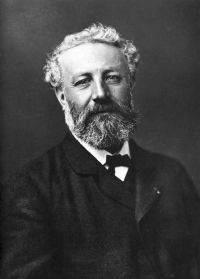
Portrait of Jules Verne Jules Verne In Search of the Castaways; or Captain Grant's Children… (1911)

Further on these protuberances rising sharply, formed the first steps of the great Alps. From this time their course was a continual ascent, as was soon evident in the strain it made on the bullocks to drag along the cumbrous wagon. Their yoke creaked, they breathed heavily, and the muscles of their houghs were stretched as if they would burst. The planks of the vehicle groaned at the unexpected jolts, which Ayrton with all his skill could not prevent. The ladies bore their share of discomfort bravely.
Source: Wikisource

Portrait of Jules Verne Jules Verne In Search of the Castaways; or Captain Grant's Children… (1911)

They camped at the foot of the Alps, on the banks of the creek of Cobongra, on the edge of a little plain, covered with little shrubs four feet high, with bright red leaves which gladdened the eye.
"We shall have hard work to get over," said Glenarvan, looking at the chain of mountains, the outlines of which were fast fading away in the deepening darkness. "The very name Alps gives plenty of room for reflection."
Source: Wikisource

Portrait of Jules Verne Jules Verne In Search of the Castaways; or Captain Grant's Children… (1911)

Toward the north the quiet waters of Lake Omco, all alive with aquatic birds, and beyond this lay the vast plains of the Murray. To the south were the wide spreading plains of Gippsland, with its abundant gold-fields and tall forests. There nature was still mistress of the products and water, and great trees where the woodman's ax was as yet unknown, and the squatters, then five in number, could not struggle against her. It seemed as if this chain of the Alps separated two different countries, one of which had retained its primitive wildness.
Source: Wikisource

Get perspective with Kwize: daily news enlightened by great literature