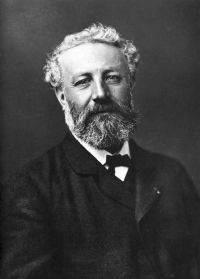
 Jules Verne,
In Search of the Castaways; or Captain Grant's Children…
(1911)
Jules Verne,
In Search of the Castaways; or Captain Grant's Children…
(1911)
“ The bullocks would never have grazed where the sheep had passed along, and consequently they had to go first, divided into two battalions. Five regiments of sheep followed, in charge of twenty men, and last of all came the horses.Sam Machell drew the attention of his auditors to the fact that the real guides of the drove were neither the men nor the dogs, but the oxen themselves, beasts of superior intelligence, recognized as leaders by their congenitors. They advanced in front with perfect gravity, choosing the best route by instinct, and fully alive to their claim to respect. ”
