Summary

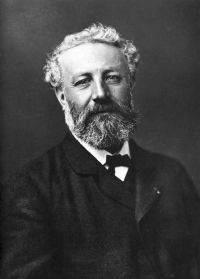
Portrait of Jules Verne Jules Verne In Search of the Castaways; or Captain Grant's Children… (1911)

It seems in Australia as if towns shot up like trees, owing to the heat of the sun. Men of business were hurrying along the streets; gold buyers were hastening to meet the in-coming escort; the precious metal, guarded by the local police, was coming from the mines at Bendigo and Mount Alexander. All the little world was so absorbed in its own interests, that the strangers passed unobserved amid the laborious inhabitants.
Source: Wikisource

Portrait of Jules Verne Jules Verne In Search of the Castaways; or Captain Grant's Children… (1911)

It was here that the swarm of diggers alighted in 1852; the natives had to fly to the interior. We are in civilized districts without seeing any sign of it; but our road will, before the day is over, cross the railway which connects the Murray with the sea. Well, I must confess, a railway in Australia does seem to me an astonishing thing!"
"And pray, why, Paganel?" said Glenarvan.
"Why? because it jars on one's ideas.
Source: Wikisource

Portrait of Jules Verne Jules Verne In Search of the Castaways; or Captain Grant's Children… (1911)

Glenarvan concurred with him, but Paganel, always eager for novelties, was for visiting Carisbrook. They gave him his way, and the wagon went on slowly.
Paganel, as was his custom, took Robert with him. His visit to the town was very short, but it sufficed to give him an exact idea of Australian towns. There was a bank, a court-house, a market, a church, and a hundred or so of brick houses, all exactly alike. The whole town was laid out in squares, crossed with parallel streets in the English fashion. Nothing could be more simple, nothing less attractive.
Source: Wikisource

Get perspective with Kwize: daily news enlightened by great literature