Summary

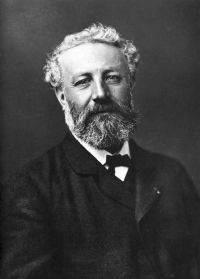
Portrait of Jules Verne Jules Verne,  Mathias Sandorf — Part II, Chapter I (1885)

“ Both were acrobats by profession and traveled from fair to fair. Matifou—or Cape Matifou as he was also called—wrestled in the ring, giving all sorts of displays of strength, bending iron bars on his biceps, lifting the heaviest of his audience at arm's length, and juggling with his young companion as if he were a tennis ball. Pescade—or Point Pescade, as he was commonly called—gesticulated, sung, played the fool, amused the public by his clownish wit, astonished them by his feats as an equilibrist, at which he was very clever, and mystified them with his conjuring tricks. ”
Source: Wikisource

Portrait of Jules Verne Jules Verne,  Mathias Sandorf — Part II, Chapter I (1885)

“ In that suburb—for Gravosa, being built at the gates of the town, may well be called such—a local fair was in progress with the usual games and sports, traveling booths, music and dancing in the open air, quacks, acrobats and entertainers, from whose shouts, and songs, and instruments there arose a tremendous uproar along the streets and jetties. ”
Source: Wikisource

Portrait of Jules Verne Jules Verne,  Mathias Sandorf — Part II, Chapter I (1885)

“ After leaving Provence they had crossed Lombardy and Venetia, mounted, it could almost be said, one on the other—Cape Matifou famous for his strength, Point Pescade celebrated for his agility. Their renown had preceded them to Trieste in Illyria. From Trieste they had advanced through Istria, descending on the Dalmatian coast at Zara, Salone, Ragusa, finding it more profitable to advance than to retreat. Behind them they were used up; in front of them their entertainment was new and likely to bring good business. ”
Source: Wikisource

Get perspective with Kwize: daily news enlightened by great literature