Summary

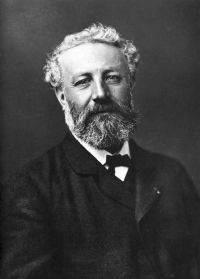
Portrait of Jules Verne Jules Verne,  Michael Strogoff (1876) — Chapter II (1876)

“ Was all the lower part of Western Siberia in a ferment? Had the rebellion already spread to the eastern regions? No one could say. The only agent which fears neither cold nor heat, which can neither be stopped by the rigors of winter nor the heat of summer, and which flies with the rapidity of lightning-- the electric current--was prevented from traversing the steppes, and it was no longer possible to warn the Grand Duke, shut up in Irkutsk, of the danger threatening him from the treason of Ivan Ogareff. ”
Source: Wikisource

Portrait of Jules Verne Jules Verne,  Michael Strogoff (1876) — Chapter II (1876)

“ Therefore, if the Kirghiz population should rise, it would be the rebellion of Asiatic Russia, and the first thing would be the separation of Siberia, to the east of the Yenisei.
It is true that these Kirghiz, mere novices in the art of war, are rather nocturnal thieves and plunderers of caravans than regular soldiers. As M. Levchine says, "a firm front or a square of good infantry could repel ten times the number of Kirghiz; and a single cannon might destroy a frightful number."
”
Source: Wikisource

Portrait of Jules Verne Jules Verne,  Michael Strogoff (1876) — Chapter II (1876)

“ What! no banishment for life for other crimes than those against social order! What! political exiles returning from Tobolsk, from Yakutsk, from Irkutsk! In truth, the chief of police, accustomed to the despotic sentences of the ukase which formerly never pardoned, could not understand this mode of governing. But he was silent, waiting until the Czar should interrogate him further. The questions were not long in coming.
"Did not Ivan Ogareff," asked the Czar, "return to Russia a second time, after that journey through the Siberian provinces, the object of which remains unknown?"
”
Source: Wikisource

Get perspective with Kwize: daily news enlightened by great literature