Summary

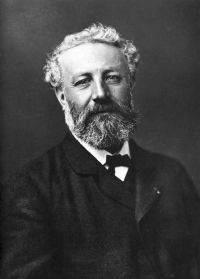
Portrait of Jules Verne Jules Verne The Voyages and Adventures of Captain Hatteras…

Duke, who was sniffing at the ice at that time, aroused by the voices, and caresses of the doctor, started off suddenly with the speed of an arrow. He barked violently and, far off as he was, his loud barks reached the hunters' ears.
The extreme distance to which sound is carried when the temperature is low is an astonishing fact; it is only equalled by the brilliancy of the constellations in the northern skies; the waves of light and sound are transmitted to great distances, especially in the dry cold of the nights.
Source: Wikisource

Portrait of Jules Verne Jules Verne The Voyages and Adventures of Captain Hatteras…

The air was filled with the dull noises of the volcano; the mountain was roaring like a boiler, its sides were quivering. Hatteras kept on, and Duke followed.
From time to time some enormous rock would give way beneath them and go crashing down to the sea.
But Hatteras did not look back. He had made use of his staff as a pole on which to fasten the English flag. His companions observed every one of his movements. His dimensions became gradually smaller, and Duke seemed no larger than a rat.
Source: Wikisource

Portrait of Jules Verne Jules Verne The Voyages and Adventures of Captain Hatteras…

The top of the volcano seemed inaccessible. The doctor wished at any risk to keep Hatteras from going higher. At first he tried gentle means, but the captain's excitement amounted to delirium; on the way he had exhibited all the signs of growing madness, and whoever has known him in the different scenes of his life cannot be surprised. In proportion as Hatteras rose above the ocean his excitement increased; he lived no longer with men; he thought he was growing larger with the mountain itself.
Source: Wikisource

Get perspective with Kwize: daily news enlightened by great literature