Summary

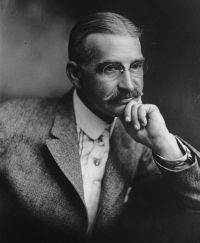
Portrait of L. Frank Baum L. Frank Baum Aunt Jane's Nieces in the Red Cross… (1915)

Indeed, she listened as intently as Beth to the thrilling account of the destruction of Maubeuge, and her blue eyes became quite as serious as the brown ones of her cousin when the tale of dead and wounded was recounted.
"Isn't it dreadful!" cried Beth, clasping her hands together impulsively.
"Yes," nodded her uncle, "the horror of it destroys the interest we naturally feel in any manly struggle for supremacy."
"This great war is no manly struggle," observed Patsy with a toss of her head. "It is merely wholesale murder by a band of selfish diplomats."
Source: Wikisource

Portrait of L. Frank Baum L. Frank Baum Aunt Jane's Nieces in the Red Cross… (1915)

But his usual merry expression had faded into one of thoughtfulness.
"The wounded haunt me by day and night," went on Beth. "There are thousands upon thousands of them, left to suffer terrible pain—perhaps to die—on the spot where they fell, and each one is dear to some poor woman who is ignorant of her loved one's fate and can do nothing but moan and pray at home."
"That's the hard part of it," said Patsy, her cousin. "I think the mothers and wives and sweethearts are as much to be pitied as the fallen soldiers. The men know what has happened, but the women don't.
Source: Wikisource

Portrait of L. Frank Baum L. Frank Baum Aunt Jane's Nieces in the Red Cross… (1915)

The Arabella was intended by her builders for deep sea transit and as Patsy admiringly declared, "looked like a baby liner." While she was yacht-built in all her lines and fittings, she was far from being merely a pleasure craft, but had been designed by the elder Jones, the boy's father, to afford communication between the Island of Sangoa, in the lower South Seas, and the continent of America.
Source: Wikisource

Get perspective with Kwize: daily news enlightened by great literature