“ This is not an original state of sin, but a state of repression in which it is held in a world that is full of so many things beside apple-trees. I may till my orchard ever so well, manipulate the trees ever so promptly, yet if the plantation then is allowed to run to neglect the processes of depreciation gain the mastery; the struggle for existence is restored.To keep one's apple-tree in the pink of perfection is as joyful an enterprise as to do anything else well. It is only the well-conditioned tree that yields its glorious harvest year by year. ”
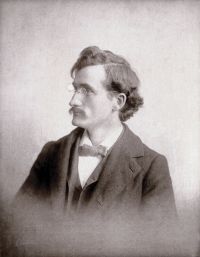
L. H. Bailey
Summary
L. H. Bailey’s The Apple-Tree, a treatise on apple cultivation in North America, examines the art and science of orchard management through careful practices such as pruning, thinning, and controlling pests like the apple-worm. Bailey highlights the interaction between human effort and natural diversity, praising the resilience of apple trees while critiquing the artificiality of commercial fruit polishing.
The work combines practical horticultural guidance with reflections on the aesthetic and symbolic significance of apple trees, whether in cultivated orchards or their wild, unmanaged counterparts. By incorporating observations on varieties, spurs, and seasonal changes, Bailey emphasizes the lasting bond between growers and the natural world, portraying the apple-tree as a symbol of both human endeavor and ecological balance.
Quotes from The Apple-Tree (L. H. Bailey)
“ In the care of the fruit-tree there is no practice which brings the grower into such intimate knowledge of the plant as that of pruning and thinning. The operator sees the tree as a whole, taking it all in; then he sees it in small detail in all its parts, even to the spurs and buds. With simple good tools, sharp and keen, and with a practiced eye, he applies a deft and swift handicraft, cutting true, making a fair clean wound, leaving the tree comely and ready for its highest effort. The pride of good workmanship may find expression. ”
“ The plant forms are strange and various, making mosaic of contrasting range of leaf-size and leaf-shape, palm and grass and fern, epiphyte and liana and clumpy mistletoe, of grace and clumsiness and even misproportion, a tall thick landscape all mingled into a symmetry of disorder that charms the attention and fascinates the eye.It is a soft and delicious air wherein I sit. A torrid drowse is in the receding landscape. The people move leisurely, as befits the world where there is no preparation for frost and no urgent need of laborious apparel. ”
