Summary

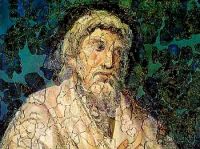
Portrait of Lactantius Lactantius Ante-Nicene Fathers Vol. VI, A Treatise on the Anger of God Addressed to Donatus… (1885)

We have sufficiently taught, as I think, in our Institutions, that there cannot be many gods; because, if the divine energy and power be distributed among several, it must necessarily be diminished. But that which is lessened is plainly mortal; but if He is not mortal, He can neither be lessened nor divided. Therefore there is but one God, in whom complete energy and power can neither be lessened nor increased. But if there are many, while they separately have something of power and authority, the sum itself decreases
Source: Wikisource

Portrait of Lactantius Lactantius Ante-Nicene Fathers Vol. VI, A Treatise on the Anger of God Addressed to Donatus… (1885)

Truly it would be a long task to follow up the opinions of all separately, who, although they used different names, nevertheless agreed in one power which governed the world. But, however, though philosophers and poets, and those, in short, who worship the gods, often acknowledge the Supreme God, yet no one ever inquired into, no one discussed, the subject of His worship and honours; with that persuasion, in truth, with which, always believing Him to be bounteous and incorruptible, they think [10] that He is neither angry with any one, nor stands in need of any worship.
Source: Wikisource

Portrait of Lactantius Lactantius Ante-Nicene Fathers Vol. VI, A Treatise on the Anger of God Addressed to Donatus… (1885)

There cannot therefore be many rulers in this world, nor many masters in one house, nor many pilots in one ship, nor many leaders in one herd or flock, nor many queens in one swarm. But there could not have been many suns in heaven, as there are not several souls in one body; so entirely does the whole of nature agree in unity.
Source: Wikisource

Get perspective with Kwize: daily news enlightened by great literature