Summary

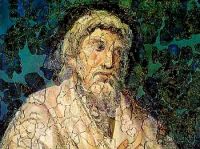
Portrait of Lactantius Lactantius Ante-Nicene Fathers Vol. VI, On the Workmanship of God… (1885)

He has gracefully spread out [15] the lower for the sake of beauty. For, as far as relates to the receiving of flavour, he is deceived, whoever he is, who thinks that this sense resides in the palate; for it is the tongue by which flavours are perceived, and not the whole of it: for the parts of it which are more tender on either side, draw in the flavour with the most delicate perceptions.
Source: Wikisource

Portrait of Lactantius Lactantius Ante-Nicene Fathers Vol. VI, On the Workmanship of God… (1885)

But the heart also, which appears to be the abode of wisdom, although it is one, yet has two recesses within, in which are contained the living fountains of blood, divided by an intervening barrier: that as in the world itself the chief control, being twofold from simple matter, or simple from a twofold matter, governs and keeps together the whole; so in the body, all the parts, being constructed of two, might present an inseparable unity.
Source: Wikisource

Portrait of Lactantius Lactantius Ante-Nicene Fathers Vol. VI, On the Workmanship of God… (1885)

The tongue enclosed within, which by its motions divides the voice into words, and is the interpreter of the mind, cannot, however, by itself alone fulfil the office of speaking, unless it strikes its edge against the palate, unless aided by striking against the teeth or by the compression of the lips. The teeth, however, contribute more to speaking: for infants do not begin to speak before they have teeth; and old men, when they have lost their teeth, so lisp that they appear to have returned afresh to infancy.
Source: Wikisource

Get perspective with Kwize: daily news enlightened by great literature