Summary

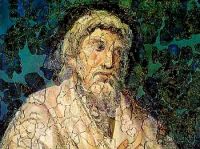
Portrait of Lactantius Lactantius Ante-Nicene Fathers Vol. VII, The Divine Institutes… (1885)

Hither he was accustomed to withdraw himself without any witnesses, that he might be able to pretend that, by the admonition of the goddess his wife, he delivered to the people those sacred rites which were most acceptable to the gods. It is evident that he wished to imitate the craftiness of Minos, who concealed himself in the cave of Jupiter, and, after a long delay there, brought forward laws, as though delivered to him by Jupiter, that he might bind men to obedience not only by the authority of his government, but also by the sanction of religion.
Source: Wikisource

Portrait of Lactantius Lactantius Ante-Nicene Fathers Vol. VII, The Divine Institutes… (1885)

The poet, indeed, compares foolish men to infants. But I say that they are much more senseless than infants. For they (infants) suppose that images are men, whereas these take them for gods: the one through their age, the others through folly, imagine that which is not true: at any rate, the one soon ceased to be deceived; the foolishness of the others is permanent, and always increases.
Source: Wikisource

Portrait of Lactantius Lactantius Ante-Nicene Fathers Vol. VII, The Divine Institutes… (1885)

For this reason they say that a covered jar of wine is placed at her sacred rites. Therefore Faunus also left to posterity no slight error, which all that are intelligent see through. For Lucilius in these verses derides the folly of those who imagine that images are gods: “The terrestrial [2] Lamiæ, which Faunus and Numa Pompilius and others instituted; at and these he trembles, he places everything in this. As infant boys believe that every statue of bronze is a living man, so these imagine that all things feigned are true: they believe that statues of bronze contain a heart.
Source: Wikisource

Get perspective with Kwize: daily news enlightened by great literature