Summary

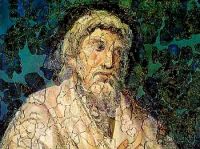
Portrait of Lactantius Lactantius Ante-Nicene Fathers Vol. VII, The Divine Institutes… (1885)

For who would wish to labour lest he should know anything? or to undertake learning of this kind that he may even lose ordinary knowledge? For if this learning exists, it must necessarily consist of knowledge; if it does not exist, who is so foolish as to think that that is worthy of being learned, in which either nothing is learned, or something is even unlearned? Wherefore, if all things cannot be known, as the natural philosophers thought, nor nothing, as the Academics taught, philosophy is altogether extinguished.
Source: Wikisource

Portrait of Lactantius Lactantius Ante-Nicene Fathers Vol. VII, The Divine Institutes… (1885)

And Arcesilas rightly saw that they are arrogant, or rather foolish, who imagine that the knowledge of the truth can be arrived at by conjecture. But no one can refute one speaking falsely, unless he who shall have previously known what is true; but Arcesilas, endeavouring to do this without a knowledge of the truth, introduced a kind of philosophy which we may call unstable or inconstant. [4] For, that nothing may be known, it is necessary that something be known. For if you know nothing at all, the very knowledge that nothing can be known will be taken away.
Source: Wikisource

Portrait of Lactantius Lactantius Ante-Nicene Fathers Vol. VII, The Divine Institutes… (1885)

For it is something of a middle character which belongs to man, that is, knowledge united and combined with ignorance. Knowledge in us is from the soul, which has its origin from heaven; ignorance from the body, which is from the earth: whence we have something in common with God, and with the animal creation. Thus, since we are composed of these two elements, the one of which is endowed with light, the other with darkness, a part of knowledge is given to us, and a part of ignorance.
Source: Wikisource

Get perspective with Kwize: daily news enlightened by great literature