Summary

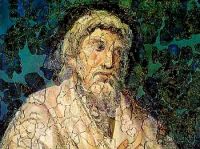
Portrait of Lactantius Lactantius Ante-Nicene Fathers Vol. VII, The Divine Institutes… (1885)

But that divine fire always lives by itself, and flourishes without any nourishment; nor has it any smoke mixed with it, but it is pure and liquid, and fluid, after the manner of water. For it is not urged upwards by any force, as our fire, which the taint of the earthly body, by which it is held, and smoke intermingled, compels to leap forth, and to fly upwards to the nature of heaven, with a tremulous movement.
Source: Wikisource

Portrait of Lactantius Lactantius Ante-Nicene Fathers Vol. VII, The Divine Institutes… (1885)

The same divine fire, therefore, with one and the same force and power, will both burn the wicked and will form them again, and will replace as much as it shall consume of their bodies, and will supply itself with eternal nourishment: which the poets transferred to the vulture of Tityus. Thus, without any wasting of bodies, which regain their substance, it will only burn and affect them with a sense of pain.
Source: Wikisource

Portrait of Lactantius Lactantius Ante-Nicene Fathers Vol. VII, The Divine Institutes… (1885)

But when He shall have judged the righteous, He will also try them with fire. Then they whose sins shall exceed either in weight or in number, shall be scorched by the fire and burnt: [2] but they whom full justice and maturity of virtue has imbued will not perceive that fire; for they have something of God in themselves which repels and rejects the violence of the flame. So great is the force of innocence, that the flame shrinks from it without doing harm; which has received from God this power, that it burns the wicked, and is under the command of the righteous.
Source: Wikisource

Get perspective with Kwize: daily news enlightened by great literature