Summary

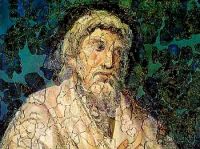
Portrait of Lactantius Lactantius Ante-Nicene Fathers Vol. VII, The Divine Institutes… (1885)

Plato says that that which always moves by itself, and has no beginning of motion, also has no end; but that the soul of man always moves by itself, and because it is flexible for reflection, subtle for discovery, easy of perception, adapted to learning, and because it retains the past, comprehends the present, foresees the future, and embraces the knowledge of many subjects and arts, that it is immortal, since it contains nothing which is mixed with the contagion of earthly weight. Moreover, the eternity of the soul is understood from virtue and pleasure.
Source: Wikisource

Portrait of Lactantius Lactantius Ante-Nicene Fathers Vol. VII, The Divine Institutes… (1885)

For in defence of faith and justice, virtue neither fears want, nor is alarmed at exile, nor dreads imprisonment, nor shrinks from pain, nor refuses death; and because these things are contrary to nature, either virtue is foolishness, if it stands in the way of advantages, and is injurious to life; or if it is not foolishness, then the soul is immortal, and despises present goods, because other things are preferable which it attains after the dissolution of the body. But that is the greatest proof of immortality, that man alone has the knowledge of God.
Source: Wikisource

Portrait of Lactantius Lactantius Ante-Nicene Fathers Vol. VII, The Divine Institutes… (1885)

If any one wishes for them, or does not place full confidence in us, let him approach to the very shrine of the heavenly letters, and being more fully instructed through their trustworthiness, let him perceive that the philosophers have erred, who thought either that this world was eternal, or that there would be numberless thousands of years from the time when it was prepared.
Source: Wikisource

Get perspective with Kwize: daily news enlightened by great literature