Summary

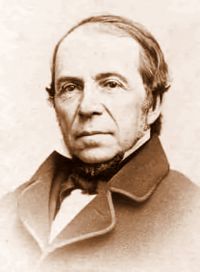
Portrait of Leo Lesquereux Leo Lesquereux The American Cyclopædia — Coal

This moss is indeed by itself a remarkable phenomenon in the economy of nature; being a kind of balancing power, absorbing the useless surplus of water from the ground, from the swamps, and from the atmosphere especially, using it in part for its growth, carefully husbanding it for the preservation and transformation of all the woody tissue, its own included, into peat, and in dry seasons distributing the remainder to feed the numerous springs which have their source in the bogs. Thus, the peat bogs, like the glaciers of some countries, feed mighty rivers.
Source: Wikisource

Portrait of Leo Lesquereux Leo Lesquereux The American Cyclopædia — Coal

But some deposits of peat are so recent that their beginning is positively remembered by old men, who have seen them grow to some thickness where as children they had seen only stagnant pools, or a forest, or a muddy swamp. All these peat deposits, like the beds of coal and of lignite, are found in connection with vegetable remains which are either dead and cover them entombed in the clay of their surface, or are still living and deposit and heap their woody matter upon them, thus constantly increasing their thickness.
Source: Wikisource

Portrait of Leo Lesquereux Leo Lesquereux The American Cyclopædia — Coal

If the more marked characters which indicate the several species of mineral coal are easily recognized at first sight, and if everybody knows the bituminous coal from the anthracite or the cannel, it is not the less certain that, considering the matter in itself and in its compounds, coal is an indivisible whole. Not only have all the kinds of coal the same constituent chemical elements, merely varying in proportion in a slight degree, but all the varieties of coal, of bituminous especially, are found in some localities in the same vein.
Source: Wikisource

Get perspective with Kwize: daily news enlightened by great literature