Summary

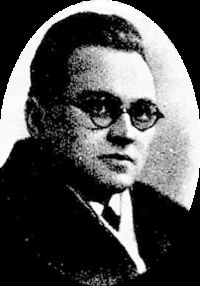
Portrait of Leo Wiener Leo Wiener Bohemia under Hapsburg misrule (1915)

Not only did German literature successfully establish itself against the French fashion, but all the smaller nations, who had almost forgotten of their historical existence, began to discover themselves. If the popular creation was truer and more important than the traditional literatures of the Græco-Roman type, then Serbia and Bohemia and Russia, which had preserved an enormous mass of oral literature in out-of-the-way places, harked back to important pasts and should develop from within.
Source: Wikisource

Portrait of Leo Wiener Leo Wiener Bohemia under Hapsburg misrule (1915)

He enjoyed the friendship of German scholars and poets, Goethe, Jacob Grimm, Pertz, and others. Goethe wrote of him: “Abbé Joseph Dobrovský, the past master of critical historical science in Bohemia, this rare man who long before had followed the general study of the Slavic languages and histories with genial industry and Herodotic travels, rejoiced in reducing his gains to the study of the Bohemian people and country, and thus united with the greatest glory in science the rare reputation of a popular name. The master is visible in whatever he attempts.
Source: Wikisource

Portrait of Leo Wiener Leo Wiener Bohemia under Hapsburg misrule (1915)

Russia was still struggling with the establishment of a linguistic norm out of the ecclesiastic Slavic and the spoken idiom, while its literature was but a feeble reflex of French pseudo-classicism. Nowhere was there the slightest conviction that the homely native dialects had a right to exist by the side of the more fortunate German, while of the past of the Slavic languages but the faintest surmises had been uttered by men untutored in historical and philological lore.
Source: Wikisource

Get perspective with Kwize: daily news enlightened by great literature