Summary

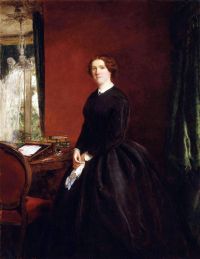
Portrait of M. E. Braddon M. E. Braddon Wyllard's Weird: A Novel

It means that in you, the man who came between me and the happiness of my life, who stole my betrothed—in you, the successful speculator, the honoured of all men, I have found the murderer of Léonie Lemarque and of her aunt Marie Prévol, and of her aunt's admirer, Maxime de Maucroix. A man must have a mind and heart of iron who could carry the consciousness of three such murders with a calm front; who could clasp his innocent wife to his breast, accept her caresses, her devotion, her revering love—knowing himself the relentless devil that he is! Julian Wyllard, thou art the man!
Source: Gutenberg

Portrait of M. E. Braddon M. E. Braddon Wyllard's Weird: A Novel

Will you have me, Hilda, when I am my own man again?"
"I will," answered Hilda softly, yet with a firm faith that thrilled him. "I shall have to brave my brother's anger, perhaps; but I will not wait till your name is cleared from this slander. Of what use is fair-weather love? It is in storm and cloud that a woman's faith should be firmest. When you have freed yourself from that old tie which has grown a weariness to you, when you can come to me in all truth and honour, my heart shall answer frankly and fully, Bothwell. And then you can tell all our friends that we are engaged.
Source: Gutenberg

Portrait of M. E. Braddon M. E. Braddon Wyllard's Weird: A Novel

That is the only way of setting me right with the world, Bothwell; and it is the only way of setting me right in my own self-esteem."
"My dear Lady Valeria, I wonder that you have not learnt to understand society better—you, who are essentially a woman of society. Do you think the world would applaud you or respect you for making a very poor marriage—for uniting yourself to a man without pursuit or means or position? You, who with beauty, rank, and wealth, might marry almost any one you pleased. The world does not smile on such marriages, Lady Valeria.
Source: Gutenberg

Get perspective with Kwize: daily news enlightened by great literature