Julian Wyllard

Definition and stakes

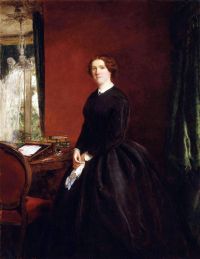
Portrait of Mary Elizabeth Braddon Mary Elizabeth Braddon,  Wyllard's Weird (1886)

“ It was a splendid Paris upon which Dora and her husband looked out in the clear freshness of the autumnal morning, but it was curiously changed from that Imperial Paris which Julian Wyllard had known twenty years before. It seemed to him this morning, looking across those ruined palace-walls, the daylight streaming through those vacant windows, as if he and the world had grown old and dim and feeble since those days.
Twenty years ago, and Morny was alive, and Jecker was a power on the Parisian Bourse, and Julian Wyllard was laying the foundation-stones of his fortune.
”
Source: Wikisource

Portrait of Mary Elizabeth Braddon Mary Elizabeth Braddon,  Wyllard's Weird (1886)

“ That Julian Wyllard could have lived a profligate life was impossible; but that theory of a double life did not necessarily imply dissipation or folly. What of a man who concealed from the world his inner life, the life of passion and emotion, who abandoned himself in secretness and obscurity to his all-absorbing love for a woman whom he dared not acknowledge before society? Such a man might verily be said to lead a double life—and Julian Wyllard might have been such a man.
Heathcote looked at his watch when he entered the Rue Lafitte.
”
Source: Wikisource

Portrait of M. E. Braddon M. E. Braddon,  Wyllard's Weird: A Novel

“ What if Julian Wyllard were to die, that successful rival of his, the man who had stolen his plighted wife from him? The thought would come, though Heathcote tried to shut his mind against it, though he hated himself for harbouring so selfish an idea. The question would shape itself in his mind, would be answered somehow or other.
If Julian Wyllard were to die, and Dora were again free to wed whom she chose? Would the old love be rekindled in her heart? Would the old lover seem nearer and dearer to her than any other man on earth?
”
Source: Gutenberg

Get perspective with Kwize: daily news enlightened by great literature