Summary

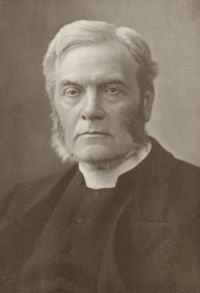
Portrait of Marcus Dods Marcus Dods The Expositor's Bible: The First Epistle to the Corinthians

The catastrophes of life that seem finally to blot out hope, the wild elemental forces in whose presence frail man is as the moth, the unknown future of the physical world, the certain death that awaits every man and listens to no appeal, all things that naturally discourage and compel us to feel our weakness,—yes, says Paul, all these things are yours, serving your highest good, bringing you on towards your eternal joy, more certainly than the things you select and buy, or win, and cherish as your own.
Source: Gutenberg

Portrait of Marcus Dods Marcus Dods The Expositor's Bible: The First Epistle to the Corinthians

To have his body a member of Christ—this is his happiness. To be one in will with Him who has brought by His own goodness the light of heaven into the darkness of earth, to learn to know Him and to love Him by serving Him and by measuring His love with all the needs of earth—this is his life. To be so united to Christ in all that is deepest in his nature that he knows he can never be separated from Him, but must go forward to the happy destiny which his Lord already enjoys—this is the Christian's joy; and it is made possible to every man.
Source: Gutenberg

Portrait of Marcus Dods Marcus Dods The Expositor's Bible: The First Epistle to the Corinthians

We have not got them under our hand to examine at leisure. Our present knowledge is as the light of a lantern by which we can pick our way, or as the starlight, for which we are thankful in the meantime; but when the sun of a wider, deeper, truer knowledge rises, what we now call knowledge shall be quite eclipsed. "When I was a child," says Paul, "I spake as a child, I understood as a child, I thought as a child: but when I became a man, I put away childish things."
Source: Gutenberg

Get perspective with Kwize: daily news enlightened by great literature